
EU T+1 industry committee readiness survey: key findings
How ready is Europe for T+1 settlement as 2026 becomes the critical execution year?
In Partnership with


SHARE THIS INSIGHT
Europe’s T+1 transition is entering a critical phase, with 30% of recommendations already implemented and major project work due by the end of 2026. These key findings show where readiness is advancing and where execution risk remains.
Europe ahead early
Engagement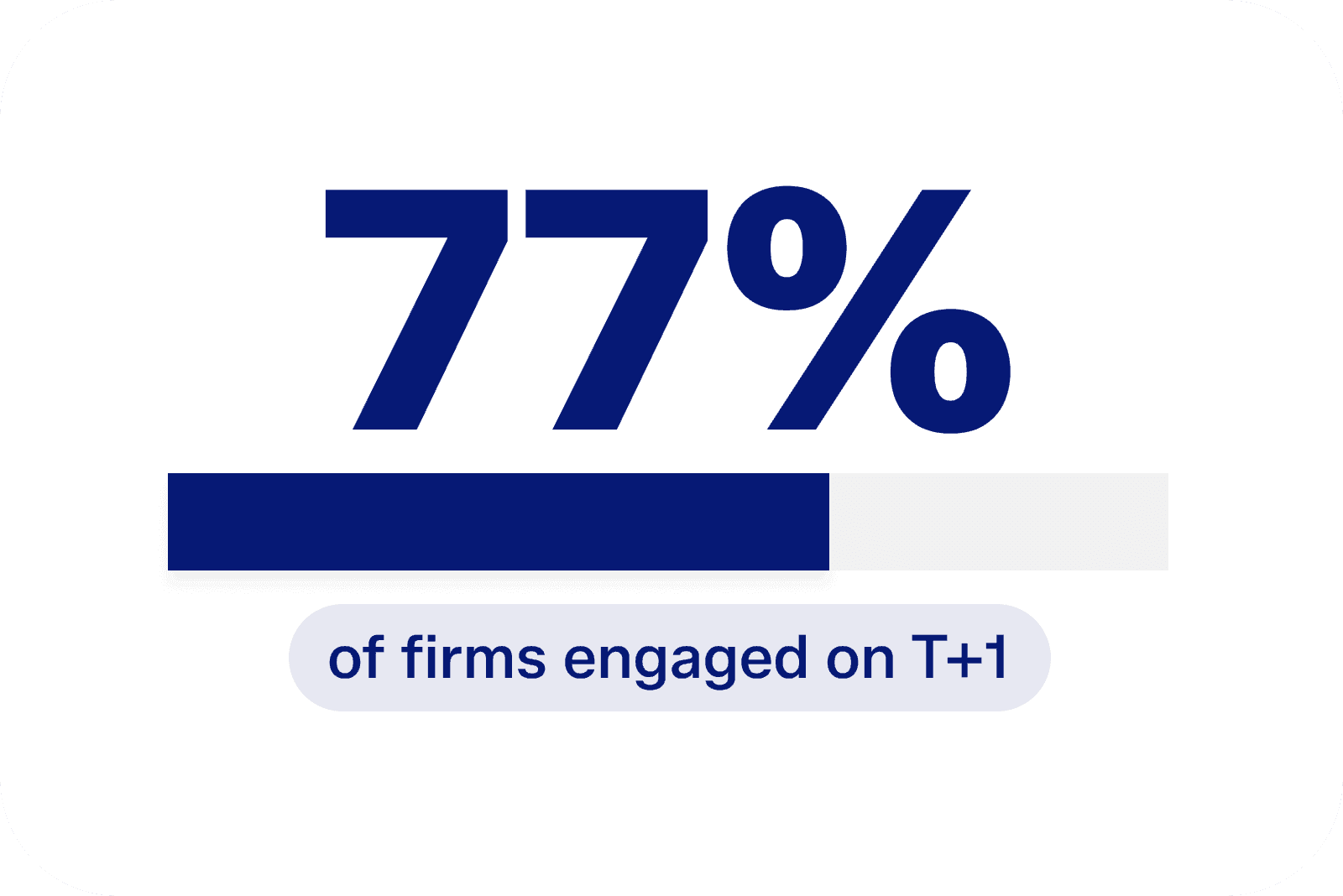
Engagement levels suggest the market is taking the October 2027 deadline seriously – ahead of where North America was at the same stage.
23% have still not engaged, creating a meaningful tail risk ahead of the deadline.
Recommendations implemented
Progress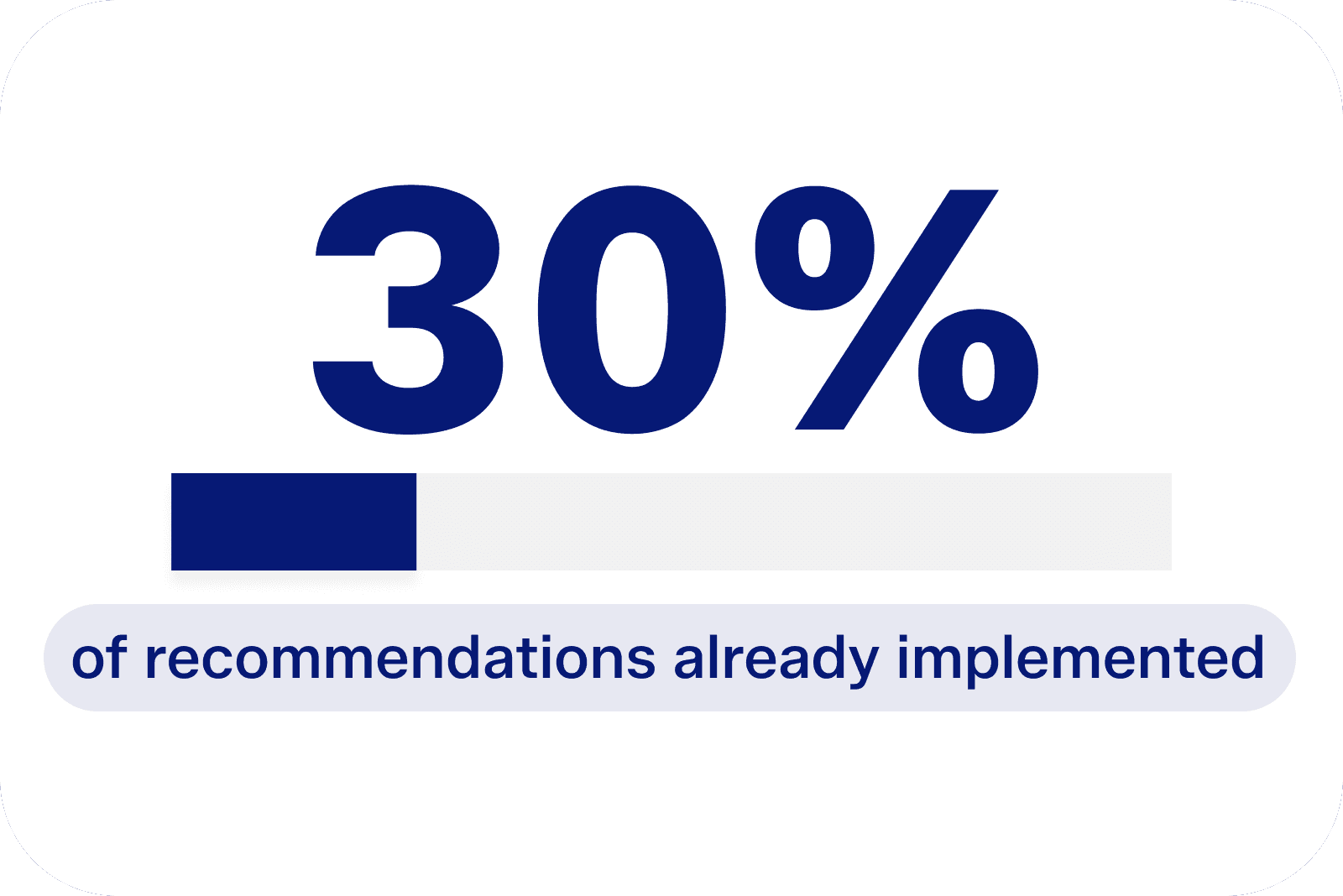
Clearing is leading the way but fund share dealing is lagging well behind, and the gap between them is significant.
Progress is uneven – firms ahead on clearing may still face material gaps elsewhere.
Budget not constraining
Budget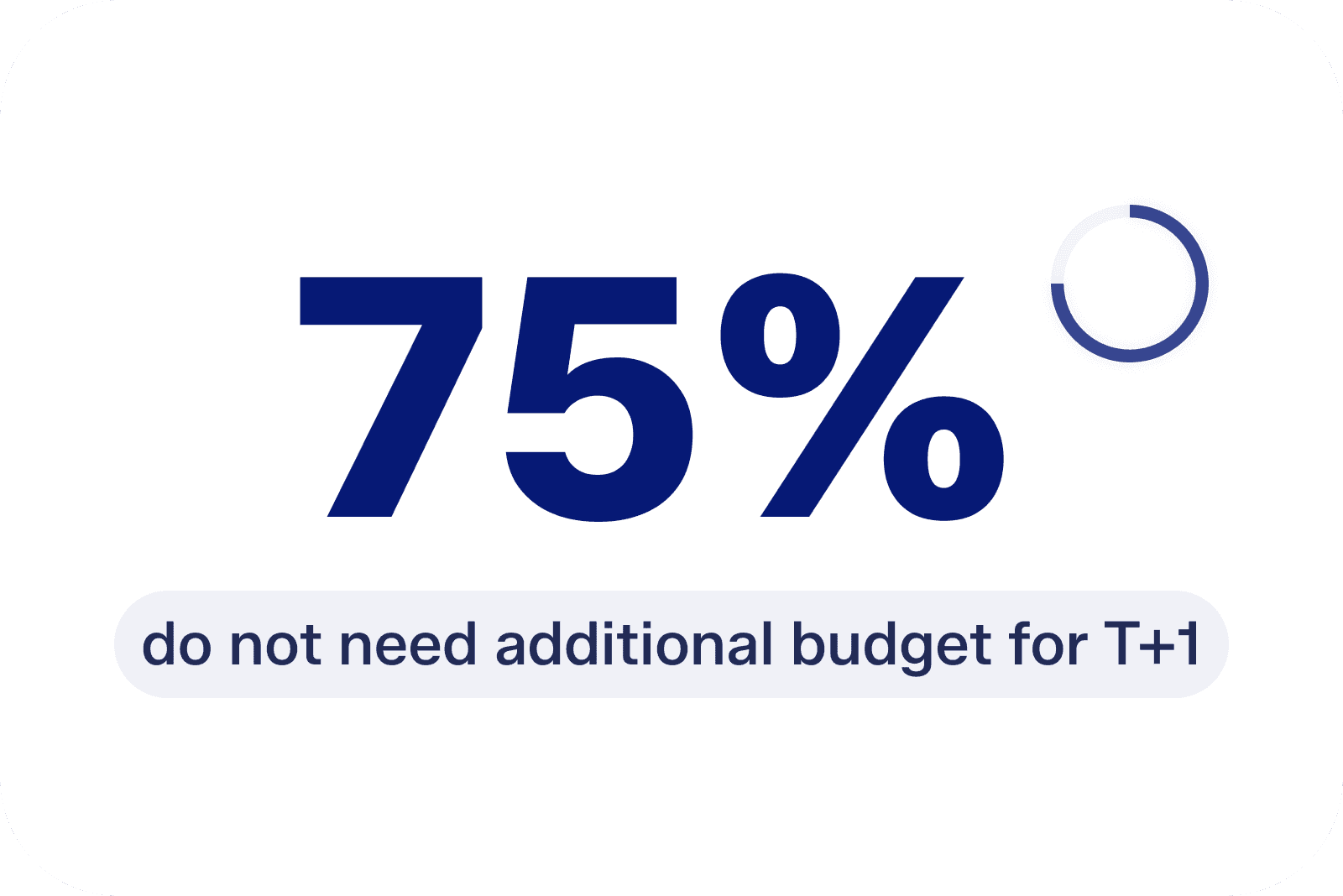
Funding is not the main constraint – but more than half have still not finalised their trade flow automation plans.
Even where budget readiness is strongest, operational planning remains the real gap.
T+1 readiness in Europe is no longer a planning question alone. With implementation timelines narrowing and operational dependencies becoming clearer, firms now need to understand where progress is real and where execution risk is still building.
How prepared is the European market for T+1 settlement, and which parts of the transition are moving fastest? Where are firms already aligned with the implementation plan, and where do automation gaps and external dependencies still create pressure ahead of 11 October 2027?
The findings are based on the European Union (EU) T+1 Industry Committee Readiness Survey and provide a market-wide view of how firms are preparing for accelerated settlement across operational, budget and implementation workstreams.
The research, produced in partnership with the EU T+1 Industry Committee, highlights:
77% are already engaged and have read the EU T+1 High-level Roadmap, positioning Europe ahead of North America at an equivalent stage
30% of industry recommendations are already in place, with clearing-related changes leading progress
53% of project work due by end-2026: 2026 is the pivotal delivery year as firms move from planning into execution
58% cite two core challenges: internal automation and dependencies on other market participants remain the main barriers to readiness
75% do not need additional budget: funding is not the main constraint, but more than half of firms have still not finalised trade flow automation plans
Ask the Xchange AI
Have a question about our research? Ask our AI assistant for specific insights.
Keep reading — it's free
Verify your email to read this content

Discover More
View All Insights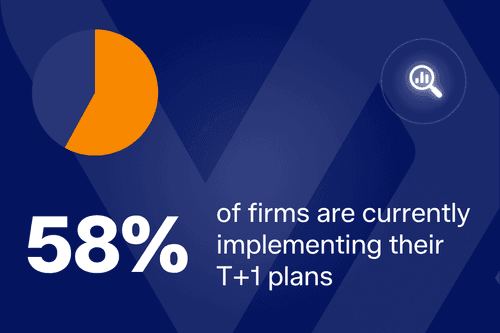
Key findings
15 July 2026
How ready is Europe for a critical year in the transition to T+1?

Webinar recording
14 July 2026
How is readiness evolving across the EU, UK and Switzerland as T+1 moves closer?

Xchange brief
14 July 2026
Our conversations this month: DLT deployment, T+1 complacency, AI in regulated institutions, EU market structure, and private markets
Xchange brief
13 July 2026
The Reserve Bank of Australia is ready to launch its first digitally native bond. Why should you pay attention to Australian digital assets?
Key findings
8 July 2026
How are firms using DLT and digital assets in practice in 2026?